U.S. Slaughterhouse ban creates new dilemmas…
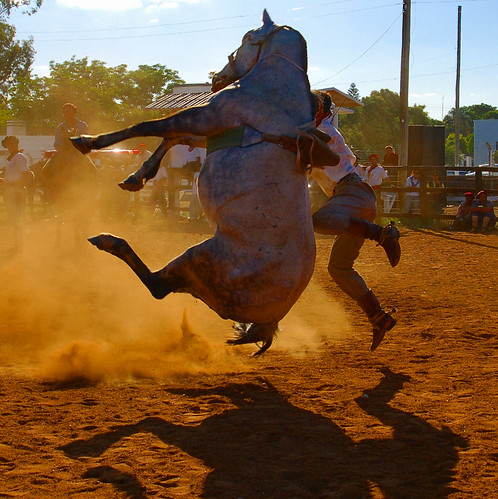
…is what I originally titled this letter to the Times-News, last winter solstice; until the editors improved it, to the more aptly titled “Horses need our protection.” Here is the jist of it:
After 1986 Kentucky Derby contender Ferdinand overcame 18-to-1 odds to become champion, he was later sold to stud in Japan. Then in 2002, the victor was evidently sent to slaughter, prompting a “from winner to dinner” hearkening slogan used by the outraged thoroughbred community in its successful campaign to ban the last of U.S. horse slaughterhouses meant for human consumption.
They still kill U.S. horses for food, you know. And a bad hitch is that many of these once-beloved creatures are beginning to face horrifically longer transports to Mexico and Canada, which excludes federal jurisdiction, from our monitoring for humane treatment. Deplorably overcrowded trailers and more obfuscated slaughterhouses continuing with questionable sanitary practices are hot concerns.
Another problem facing new West ranchers are higher hay prices which, coupled with the slaughterhouse closures, has impelled some to abandon their (mostly unbranded) unaffordable horses onto neighboring ranch and public lands.
For those who haven’t heard, it may come as a jolt to the head, that our championed horses now face even murkier final finish lines before export to lucrative overseas markets where horsemeat has long been considered a delicacy. Some horsemeat, after beyond-border-butchering, makes the long haul back into the United States for exotic animal consumption at a controversial zoo near you.

After this letter posted, we had some interesting follow up discussions. Naturally, such a sensitive subject could be easily misconstrued as my meaning, “it’s just awful to send an old crippled horse to a packing plant.”
Sure, there’s nothing wrong with people who eat horsemeat. As far as I can remember, the same thing goes for robust ham & buffalo-burger munchers - hidden connection between Mad Cow and misdiagnosed Alzheimer’s disease notwithstanding.
Friends have called me a carnivore before. If offered, I might test a tiny bit of horsemeat “to sate my academic curiosity,” like Commander Tibbets, in the spirit of inspecting dark Nagasaki this time of year, back in ‘45. On the other hand, I might change my mind at the last second and turn away disgusted from the holiday dinner table. Afraid I can’t say for sure, til it actually happens to me.

People from PETA poles apart (People Eating Tasty Animals and People for Ethical Treatment of Animals) might agree; that if there’s something more awful than wasting perfectly good meat; it’s the unnecessary harsh treatment, some of these animals are stricken with on their way to slaughterhouses.
Even with the large amount of questionable burgers I’ve madly consumed over the years, I still vividly remember the chapter from FAST FOOD NATION that reveals how the processing plant in Greeley, Colorado slowed production down to a safer level, on days that meat was being shipped to Europe, because they had to meat higher standards!
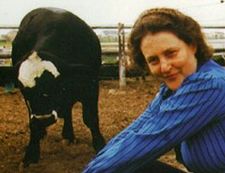
For those who believe that the term “Humane slaughtering” is oxymoronic, please reflect upon this quote from visionary Temple Grandin; who designed the sweeping curved corrals that reduce stress in animals being led to slaughter and are used for fifty percent of the cows slaughtered in America.

“I think using animals for food is an ethical thing to do, but we’ve got to do it right. We’ve got to give those animals a decent life and we’ve got to give them a painless death. We owe the animal respect.”
And this from Wikipedia:
One of Temple’s most important essays about animal welfare is “Animals are not Things,” in which she posits that animals are technically property in our society, but the law ultimately gives them ethical protections or rights. She uses a screwdriver metaphor: a person can legally smash or grind up a screwdriver but a person cannot legally torture an animal.

In Idaho, horses are considered production animals, whereas in California, the State has deemed horses “companion animals.” This gives horses improved legal rights against inhumane treatment.
However, this is a murky issue, since there are many parameters, which define production animals, versus companion animals. I would be interested in hearing viewpoints from equestrians familiar with this issue, especially anybody who knows about the challenges that the California Humane Society must have come up against, while trying to implement regulations with such far-reaching ramifications.

Every Idaho Agriculture inspector has more than a handful of revolting stories involving severe horse abuse. With the higher price of hay, reports of horses starving in Idaho increased 5% this last year. This summer, The Times-News reported that Horse abuse cases are almost certain to increase and while local law enforcement doesn’t have the resources to cope, the editorial board offered some potential solutions.
State equine regulators and BLM officials fear that in this economic pinch, more Idahoans will dump their horses on rangeland rather than euthanize them. And this has been happening, ever since the closure of the last U.S. horse slaughterhouse meant for human consumption.
Some horse-lovers have wondered how an impact of several thousand horses running newly wild again on BLM lands, compares to the vastly larger number of cows now grazing on Idaho Public Lands. Then again, anybody wanting to speak up against the powerful cattle industry, should probably remember the difficulty given to Oprah.
Truly, the way in which we treat animals, reveals much about ourselves.

This summer solstice, Cassidy Friedman wrote a brilliant front-page article for the Times-News, which encompassed many of these same high horse concerns.
Since then, a new horse rescue operation opened their gates, led by some local concerned citizens. While it took a lot of hard work, their first mission was highly successful, and they found homes for almost all the horses. (I’d be happy to update in greater detail, where this group’s rescue efforts now stand, as soon as I hear back from them)
Meanwhile, here are two stories about “Betty’s Girls Rescue” written by Katy Moeller for the Idaho Statesman:
“Rescued Paint horses in Wood River Valley need homes, help”:
http://www.idahostatesman.com/ourtowns/story/484403.html
And “Paint horses find new homes inValley”:
http://www.idahostatesman.com/ourtowns/story/510809.html
Another Idaho group supporting equine rescue, of older, abandoned and troubled horses is the non-profit Orphan Acres. Twin Falls photographer Scott Sommers has a plan to try to sell 2 million calendars featuring horses, to help support Orphan Acres.
I think the Ag Weekly article “Abandoned horses pose dilemma for ranchers”, describes best the slaughterhouse dilemma many New West Ranchers face, when it says: “There is no perfect answer to this problem, and the horse processing thing certainly is not a solution for a lot of people. But it is for a lot of others.”
With the shift in horse slaughterhouse laws, it’s nice that these rescue operations are giving people one more option to choose from, while they are facing the difficult decision of what’s best to do with the beloved horses they can no longer afford to keep.


